Critical Care.
Above the Distance.
Air ambulance transportation for patients who require medically coordinated long-distance travel, with support planned around their condition and transfer requirements.
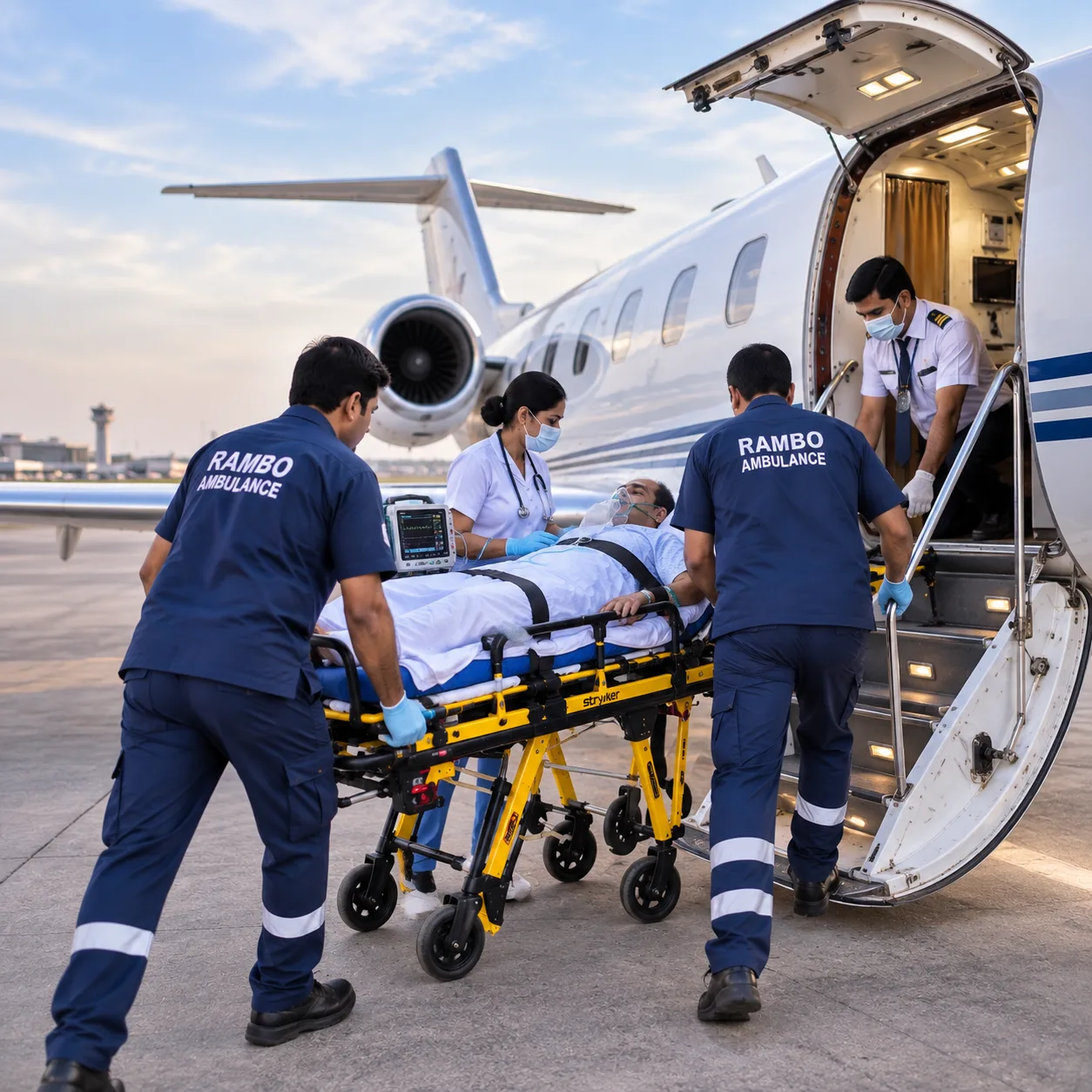
More Than a Flight.
It's a Medical Transfer.
An air ambulance is a medical transportation service designed to move patients over long distances by air when air travel is considered appropriate for their medical and transportation requirements.
Patient Condition
Understanding the patient's current medical requirements.
Flight Logistics
Coordinating the appropriate aircraft and journey.
Medical Support
Arranging medical professionals according to the patient's needs.
Ground Transfers
Coordinating ambulance transportation before and after the flight.
An air medical journey is coordinated around the patient, not simply around the flight.
One Patient.
Three Modes of Care.
An air transfer is not a single movement. Ground transportation, airport coordination and medical air travel work together to complete the patient's journey.
HOME / HOSPITAL
Patient is transported from the current location to the departure airport.
AIR AMBULANCE
Patient travels by the arranged air medical service with the required medical support.
DESTINATION AIRPORT
A receiving ambulance can be coordinated to continue the journey after landing.
The medical journey
doesn't end at the airport.
When the Journey Is
Too Long for a Conventional Transfer.
Air medical transportation may be considered when distance, time, medical requirements and operational factors make air travel appropriate.
Long-Distance Transfer
When a patient needs to travel a substantial distance between cities or states.
Time-Sensitive Transfer
When reducing travel time is an important consideration and the medical team determines air transport is appropriate.
Specialized Treatment
When a patient needs to reach a specialized healthcare facility located far from their current location.
Interstate Hospital Transfer
When a patient needs to move between hospitals in different parts of India.
Return to Hometown
When a patient needs supported transportation back to their hometown after treatment.
Medically Supported Travel
When ordinary commercial travel may be unsuitable or inappropriate for the patient's medical requirements.
Whether air medical transportation is appropriate depends on the patient's clinical condition, stability, distance, aircraft availability and medical team's assessment.
A Medical Environment
Above the Clouds.
The air medical environment is arranged around the patient's condition, required level of support and specific transfer plan.
Patient Monitoring
Monitoring appropriate to the patient's condition and level of transport support.
Respiratory Support
Respiratory and oxygen support may be arranged according to clinical requirements.
Medical Support
Medication and other clinical support can be provided within the scope of the accompanying medical team.
Stretcher Transport
Patients requiring stretcher transportation can be accommodated according to the aircraft arrangement.
Medical Team
Doctor, nurse or other qualified medical personnel may accompany the patient depending on requirements.
Continuous Coordination
Ground and air transportation can be coordinated across the complete journey.
Aircraft configuration, equipment and medical personnel vary by patient requirements and the specific air medical arrangement.
Choosing the
Right Way to Travel.
ROAD
GROUND MEDICAL TRANSPORTSuitable for direct ground journeys when road travel is appropriate for the patient's requirements.
- Local transfers
- Nearby cities
- Door-to-door transportation
- Appropriate road journeys
TRAIN
LONG-DISTANCE RAIL TRANSFERMay be considered for planned long-distance transfers where rail travel with appropriate support is suitable.
- Long-distance journeys
- Interstate transportation
- Supported rail travel
- Planned medical transfers
AIR
AIR MEDICAL TRANSFERMay be considered for very long distances and time-sensitive transfers when medically appropriate.
- Very long distances
- Time-sensitive transfers
- Interstate medical transportation
- Supported air travel
The best mode depends on the patient — not just the distance.
From Mumbai to the
Care You Need.
Long-distance medical transfers can be coordinated from Mumbai toward destinations across India, depending on patient, aircraft, airport and operational requirements.
The routes shown are illustrative. Actual aircraft, airport, route and flight availability depend on operational, regulatory and medical requirements.
It Takes More
Than an Aircraft.
A coordinated air medical transfer connects multiple teams before, during and after the flight.
Ground Ambulance Team
Handles pickup and airport transfer.
Hospital / Medical Team
Coordinates clinical requirements and transfer readiness.
Air Medical Team
Provides required medical support during the flight.
Aviation Coordination
Coordinates aircraft and flight logistics.
Destination Ambulance
Continues the patient's journey after landing.
Start With the Patient.
Then Plan the Flight.
Share Patient Details
Tell us the current location, destination, condition, hospital details, mobility requirements and required support.
Medical & Transport Assessment
The patient's requirements are reviewed to understand the appropriate level of transportation and support.
Flight Coordination
Aircraft, medical personnel, airport and ground transportation arrangements are coordinated.
Complete Medical Journey
Ground ambulance → Airport → Air transfer → Destination ambulance → Receiving facility.
Frequently
Asked Questions.
Information about air ambulance arrangements, medical support, transfers and coordination.
An air ambulance is an aircraft-based medical transportation service used to transfer patients who require medical support during long-distance air travel.
Air ambulance transfers can be arranged from Mumbai depending on patient requirements, aircraft availability, destination and operational considerations.
Some critically ill patients may be transported by air, but suitability depends on their clinical condition and the assessment of the treating or transport medical team.
Medical personnel can be arranged depending on the patient's condition and required level of care.
Nursing support may be arranged depending on the patient's medical requirements and the selected transfer plan.
Ground ambulance transportation to and from the airport can be coordinated as part of the overall medical transfer.
Long-distance and interstate medical transfers may be arranged subject to aircraft, airport, regulatory and operational availability.
The cost varies significantly depending on distance, aircraft type, medical team, equipment, airport charges, ground transfers and other operational requirements. A transfer-specific quotation is required.
Contact Rambo Ambulance with the patient's current location, destination, medical condition and required support so the transfer requirements can be discussed.